
That longer name gives it more gravitas and explains its link to electrical wiring and installations. But what exactly does it mean and why does it matter to your business? Let’s break it down in plain English.
BS 7671 explained
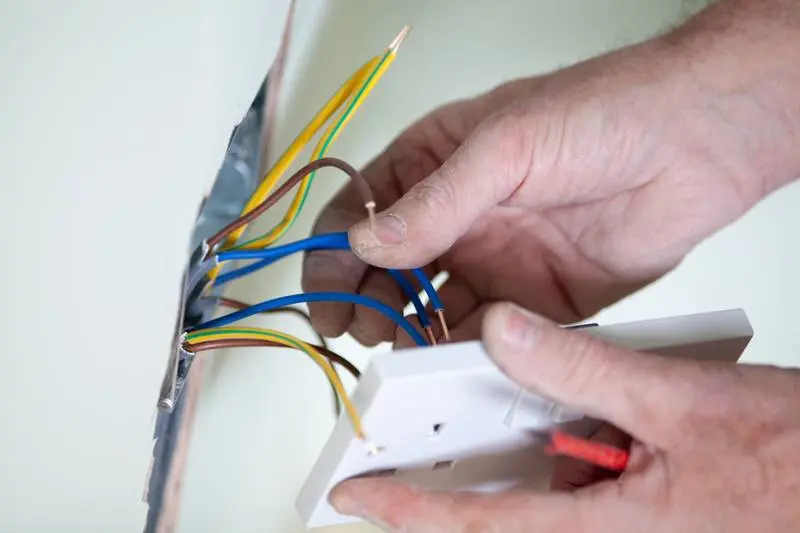
BS 7671 is the official British Standard for electrical installations. It’s co-published by the Institution of Engineering and Technology (IET) and the British Standards Institution (BSI). Prior to 1992, the IEE Wiring Regulations were the industry standard. They morphed into BS 7671. It’s the document that sets out how electrical systems in commercial and residential premises should be designed, installed and tested. Think of it as the rulebook that ensures wiring is safe, reliable and fit for purpose. We’re talking about low-voltage and extra-low-voltage electrical installations here (those typical in most commercial and residential premises). BS7671 doesn’t extend to high voltage systems. The current version of BS 7671 is the 18th Edition. And it was last updated with amendment three in 2024. That brought in newer requirements around things like surge protective devices, energy efficiency and EV charging points (electric vehicle charging). It included specific details on the installation of Arc Fault Detection Devices (AFDDs), and the use of Residual Current Devices (RCDs) for certain electrical circuits. BS 7671 is a standard for the United Kingdom, with slight variations in Scotland and Northern Ireland. It also aligns with both European and international standards.Is BS 7671 a statutory document?
This isn’t really a simple “yes” or “no” answer, so it can get a bit confusing. Strictly speaking, BS 7671 isn’t a legal requirement in itself. It’s a national standard published by the British Standards Institution (BSI) and maintained by the Institution of Engineering and Technology (IET). But, here’s the thing. It’s referenced in lots of laws and building regulations. So, in practice, if you meet the specific requirements of BS 7671, you can be confident your electrical installation will comply with other legal safety tests. The wiring regs may not be statutory, but they’re treated as the go-to benchmark by inspectors, insurers and industry bodies.How does BS 7671 relate to UK electrical safety regulations?
It may not be law in its own right, but the Health and Safety Executive (HSE) recognises it as an important code of practice. The industry body acknowledges that electrical installations that attain the specific requirements of BS 7671 are likely to meet statutory legal regulations too. The key regulations that sit alongside BS 7671 include:- Electricity at Work Regulations 1989 – requires all electrical systems to be safe. BS 7671 is the recognised way to show compliance.
- Building Regulations (Part P in England and Wales) – covers electrical work in residential premises. It requires installations to meet fundamental safety principles which link back to BS 7671.
- The Health and Safety at Work etc. Act 1974 – encompasses the safe installation and maintenance of electrical equipment and systems. It aims to ensure the health, safety and welfare of employees.
What are the legal implications of not complying with BS 7671?
Ignoring BS 7671 can have real consequences. You could face legal action for failing to comply with the Electricity at Work Regulations or Health and Safety at Work etc. Act. Sounds expensive doesn’t it? You could find that insurers reject claims if installations don’t meet these recognised standards. And you may face contractual problems. Non-compliance can be treated as breach of contract. An important implication – albeit not a legal one – is the safety risk. Faulty electrical installations are fire risks and could result in personal harm or electrocution and major business disruption. That’s a danger to your people, as well as your business. For any business, that’s a risk not worth taking. Electrical compliance is crucial for the safety, efficiency and longevity of your business operations.Stay safe and compliant with our help
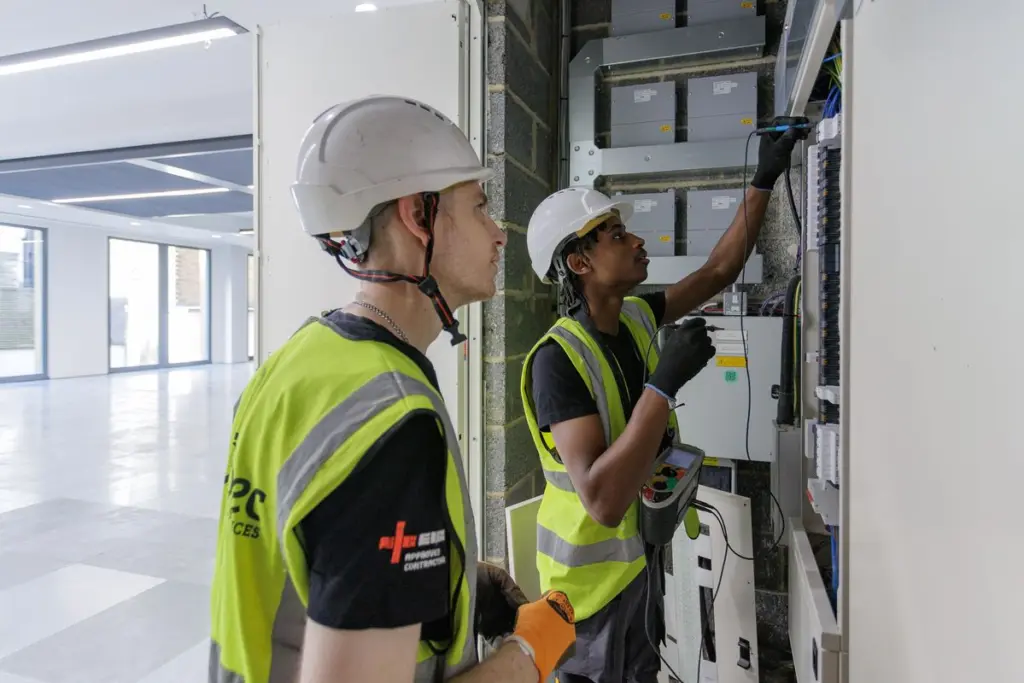
The main focus of BS 7671 is the design, construction, inspection and testing of electrical installations. It’s a recognised code of practice and intends to keep your people and premises safe. We make BS 7671 simple for our clients:- Design and installation – all of our projects are delivered in line with the latest wiring regs.
- Testing and certification – we conduct rigorous testing (including EICRs), verification and documentation.
- Upgrades and remedial work – we can bring older systems up to modern safety standards.
- Ongoing support – we can take on planned maintenance, risk assessments and inspections to keep you compliant.
Understanding what counts as a portable electrical appliance, and how it should be tested, is an important step in protecting your staff, visitors and your business. Here, we’ll explain what you need to know about portable electrical appliances and their testing requirements.
What electrical equipment counts as a portable electrical appliance?
A portable electrical appliance is generally defined as any item of electrical equipment that:- You plug in to a mains-powered socket
- Is hand held or can be moved easily whilst attached to the electrical supply
- Is connected by a flexible lead rather than fixed wiring.
Kitchen and breakout areas
Kitchens and staff breakout spaces typically contain high-use appliances that combine electricity, heat and sometimes water. That could be a recipe of disaster, so regular checks are essential. Common examples include:- Kettles
- Microwaves
- Toasters
- Coffee machines
- Fridges and freezers
- Dishwashers
- Vending machines
- Water boilers
- Plug-in hot plates.
Office and workspaces
Office environments contain a large number of portable appliances that rely on plugs and flexible cables. Typical office appliances include:- Desktop computers
- Monitors and screens
- Laptops and docking stations
- Printers, scanners and copiers
- Photocopiers
- Desk lamps
- Extension leads and multi-socket adapters
- Phone chargers.
Information technology and communications
IT and communications spaces often house critical equipment that supports day-to-day business operations. Electrical reliability’s essential for these items. Common equipment includes:- Servers and server racks
- Network switches and routers
- Uninterruptible power supplies (UPS)
- Power distribution units (PDUs)
- External hard drives and backup devices
- Cooling fans and plug-in ventilation units.
Bathrooms and changing facilities
Electrical equipment used in bathrooms or washrooms requires extra attention due to the presence of moisture. Portable, often hand-held, appliances may include:- Hand dryers
- Hairdryers
- Wall-mounted heaters with plug connections
- Cleaning equipment
- Plug-in air fresheners.
Workshops and industrial areas
These tend to be higher-risk environments. The tools and electrical equipment often experience heavier use and tougher conditions. Examples include:- Power tools (electric drills, grinders, saws)
- Extension leads and cable reels
- Portable lighting
- Chargers for tools and batteries
- Vacuum cleaners
- Washing machines.
What does Portable Appliance Testing involve?
Portable Appliance Testing (PAT) is the process of inspecting and testing electrical appliances to ensure they’re safe to use. It’s a key part of workplace electrical safety. But what does the PAT testing process actually involve?1. Visual inspection
This is often the most important part of the process. It involves checking for:- Damaged plugs or cables
- Exposed wiring
- Signs of overheating or burning
- Loose connections or incorrect fuses.
2. Electrical testing
Depending on the type of appliance, tests may include:- Earth continuity testing
- Insulation resistance testing
- Polarity checks
- Functional testing where appropriate.
3. Labelling and reporting
PAT testers label electrical appliance with its test result and retest date. A full digital or paper report is also provided. That gives you clear records for compliance, audits and insurance purposes.Sign up for more expert guidance and compliance delivered straight to your inbox