
Commercial PAT Testing
Portable appliance testing keeps your equipment records current and provides evidence that electrical equipment is being appropriately maintained. We carry out PAT testing for commercial and public sector organisations across London and the South East, working around your operations to minimise disruption.

What our PAT testing includes

FAQs
Straight answers to the most common questions about fixed wire testing for commercial properties.
Is PAT testing a legal requirement?
No fixed testing interval is set in law, but employers are required to maintain electrical equipment in a safe condition under the Health and Safety at Work Act 1974 and the Electricity at Work Regulations 1989. PAT testing carried out to the IET Code of Practice demonstrates that requirement has been met. Your insurer may also specify testing as a condition of cover.
How often does PAT testing need to be done?
Frequency depends on the type of equipment and the environment. Office equipment in low-risk settings is typically tested every one to four years. Equipment used in higher-risk environments, or by members of the public, should be tested more frequently. We can advise on the right schedule for your site.
What types of equipment need to be tested?
Any electrical equipment connected to the mains supply via a plug. That includes computers, monitors, printers, kitchen appliances, extension leads, chargers, power tools, and portable lighting. Fixed equipment, such as hard-wired appliances, is covered under your EICR rather than PAT testing.
What happens to items that fail?
Failed items are labelled with a fail sticker and reported to you on the day. They should be taken out of use until they have been repaired or replaced. We record all failures in your register with details of why the item failed.
Case Studies
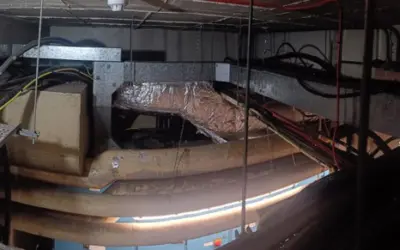
Electrical Survey for Heat Pump Installation
Historic building

EICR
St Paul’s Catholic School, London
Our accreditations
We're proud to hold several important certifications that demonstrate our commitment to quality and safety. Every accreditation is independently verified and kept current.


