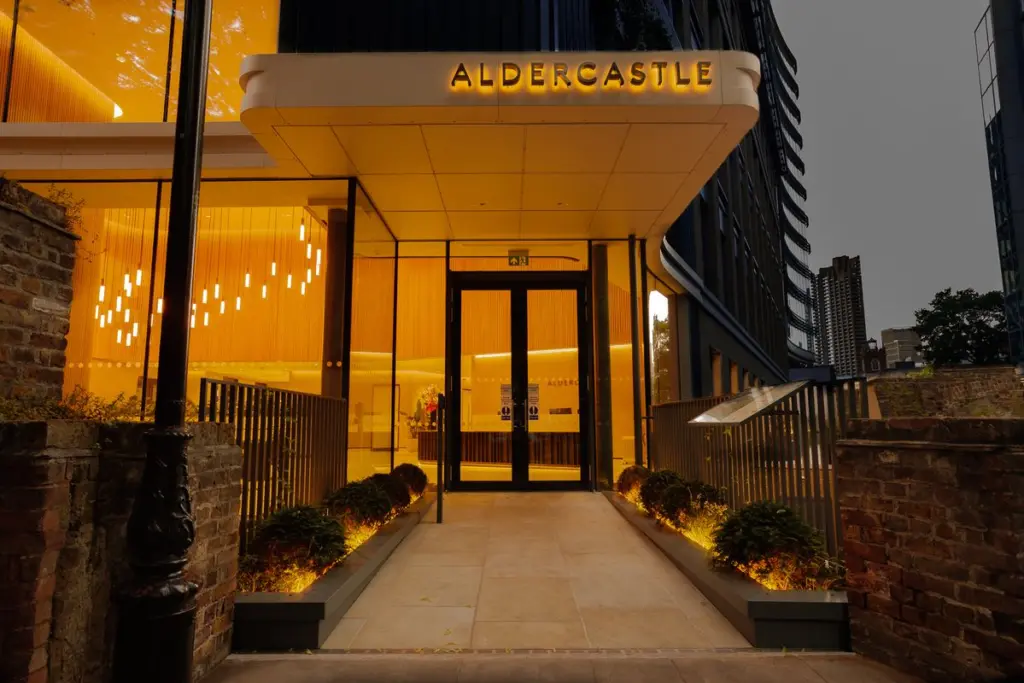

It’s vital to get your office cabling right from the start. A fully functioning electrical system is not just about powering your devices. It’s about ensuring connectivity, productivity, safety, security… the list goes on.
A fundamental part of modern office design is well-considered electrical work. Here, we’ll guide you through the key things to think about when you’re planning an office fit out.
How do you plan the cabling layout for an office fit out?
When planning your office fit out, it’s important to think about what your business needs now, but also in future. Factor in levels of adaptability so that your workspace can evolve as your business does. It’s a cost-effective approach as it’ll save you a further upgrade down the line.
Cabling isn’t something to leave until the last minute. A well-designed cabling plan should be part of your overall office fit out strategy. Consider how your teams work, the specific needs of each workspace, where equipment will go, and how your layout may need to evolve over time.
A few aspects to think about:
- Where will desks, meeting rooms, and collaboration areas be?
- How many data and power points will each workspace need?
- Are there plans for hot-desking or hybrid working?
- Will you have solid walls or an open plan office environment with partitioning?
Health and safety’s always a priority in commercial workspaces. You must avoid having cables running all over the place. They’re a major hazard. It takes careful planning to meet high standards in safety, function, and also aesthetic design. Engaging with a qualified electrician and cabling expert from the get-go ensures that the infrastructure aligns with your specific business needs, as well as safety standards, from the start.
Types of fit out project
There are two different categories of fit out project – Cat A and Cat B. The planning process will vary depending on the type of fit out project. Cat A fit outs involve only the basic building infrastructure and services. Sometimes referred to as the ‘empty shell’ fit out, a Cat A fit out is about functionality rather than aesthetics.
Cat B fit outs, on the other hand, take the commercial space to the next level. They take the empty shell and create fully-functioning, bespoke work environments. Whilst a Cat A fit out would include lighting installation, a Cat B fit out would incorporate feature lighting and bespoke lighting controls for example.

Photography by Matt Sprake of www.mattsprake.co.uk
7 factors to think about when planning cabling for your office fit out project
1. Use a structured cabling system
Structured cabling’s a unified and organised system that supports diverse hardware uses. In contrast to ad-hoc cabling, a structured system is neater, easier to maintain, and much more scalable. It comprises:- Data cabling
- Voice cabling
- Fibre optics for high-speed connectivity
- Patch panels and server room organisation.
2. Futureproof your office fit out
Build in some wiggle room and flexibility to your office fit out plans. Your cabling provision needs to continue to support your business as it scales and expands. Take a forward-thinking approach and plan for extra capacity from the offset. It’ll save you hassle and cost in the long run. For example, install more power sockets than you currently need. Use high quality cabling that can handle future tech. Leave space in trunking and conduits for expansion. Factor in additional people and workspaces in the equation.3. Power and data go hand-in-hand
When you’re planning your fit out project, remember that power sockets and data ports should be positioned together. There’s no use having a network port without a power socket nearby to plug in the laptop. Smart placement boosts productivity and aesthetics at the same time. Floor boxes are ideal for open-plan workspaces whilst wall-mounted ports are better in meeting rooms.4. Communication and connectivity
In an office environment, people need to be connected and able to communicate constantly. Wifi networks are essential, especially in open and flexible workspaces. But for speed, reliability, and security, nothing beats a hardwired connection. In particular, audio-visual equipment, servers and even desk computers benefit hugely from being wired in. A reliable data cabling system is necessary for fast and efficient communication and internet access. The installation of a comms cabinet will keep your network organised and secure. That’s so beneficial for digital operations.5. Optimise the office environment
Optimising the physical office environment can boost productivity. Carefully planning aspects like lighting, heating, air conditioning and ventilation will have an important impact on your business. Decent office lighting goes beyond illumination. It affects productivity levels, enhances wellbeing and comfort, and provides visibility. Consequently, you need to plan your lighting installations – task lighting, ambient lighting, energy-efficient LED lighting and emergency lighting – to ensure the perfect lighting environment for different work activities.6. Prioritise safety and security
Security’s a major concern for any workplace. Installing an access control system during your office fit-out can help to safeguard your premises. It restricts access and controls who can enter and exit certain areas. Access control systems provide an extra layer of security. In addition, you need to factor in the positioning of other security systems like CCTV, smoke detectors and emergency lighting.7. Keep your electrical system up-to-date
The beating heart of your office’s electrical system is the distribution board (aka fuse board or breaker panel). They become less efficient and effective over time. It’s important to check, and update, your distribution board to keep your electrical system compliant. A qualified electrician can inspect, maintain or replace your electrical systems to ensure workplace safety and reduce the risk of electrical failures. And for you, that gives peace of mind.
Photography by Matt Sprake of www.mattsprake.co.uk
Work with us – we’re office cabling specialists
We’re an experienced and professional team of qualified electricians operating in and around London. We pride ourselves on designing and maintaining high quality electrical installations in diverse commercial premises. Each project is completely bespoke. We work in collaboration with our clients to their unique specifications. You have a single point of contact which makes the project management process run smoothly. Let’s chat to find out how we can help you with your office fit outs.Sign up for more expert guidance and compliance delivered straight to your inbox